“Coffee growing belt” search results (700)
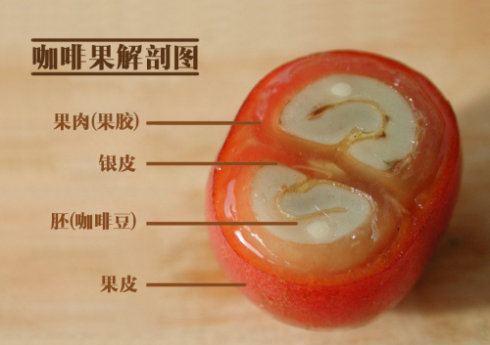
The beautiful red fruit of coffee knowledge the layered diagram of coffee fruit and the detailed introduction of the text.
Coffee shop lovers must have seen coffee beans (Coffee Bean), but coffee fruits may not have been seen. Of course, I haven't seen it either, but I have to see it, but if Yirgacheffe of Chongqing Brista Coffee West Point College can grow a job smoothly, then I won't have to run so far. Coffee tree cultivation is called coffee belt (Coff).
2016-01-04 Coffee knowledge drift bright fruit layering illustration text detail introduction
Major Coffee producing areas in the World (1)
Coffee production zones (commonly known as coffee belts) range from 25 degrees north latitude to 30 degrees south latitude, covering many countries in Central, West Africa, the Middle East and South Asia, the Pacific, Latin America and the Caribbean. The reason why coffee cultivation is concentrated in this area is mainly due to the limitation of temperature. Because coffee trees are vulnerable to frost, neither north nor south latitude is suitable, especially in the tropics.
2014-08-14 Coffee producing area world coffee producing area coffee encyclopedia
The growth habits of coffee the distribution of coffee the three main types of coffee
Coffee trees grow in national farms in tropical or subtropical regions known as coffee belts centered at the equator and between latitudes of 25 degrees south and north. At present, coffee is produced in more than 60 countries, widely distributed in South America, Central America, the West Indies, Asia, Africa, Arabia, the South Pacific and Oceania. In terms of output, Brazil, which accounts for the first place in the world, accounts for about 30%; the second
2016-05-25 Coffee growth habit distribution three major species coffee tree growing equator
The planting temperature of coffee tree is between 15 degrees and 25 degrees.
The origin of the coffee tree is Ethiopia in Africa. In botany, coffee trees belong to the evergreen trees of the subgenus Rubiaceae, and coffee beans, commonly known as coffee beans, are actually the seeds of the fruit of coffee trees. They are called coffee beans only because they are shaped like beans. Climate is the decisive factor for coffee cultivation. Coffee trees are only suitable for growing in the tropics or subtropics, so latitude 25 degrees south and north.
2015-10-07 Coffee planting condition temperature between 15 degrees -25 degrees between coffee
Coffee tree history coffee morphological characteristics coffee cultivation techniques
Coffee tree is a shrub or small tree of Rubiaceae; leaves opposite, leathery, long oval; every March, branches will emerge white flowers, petals spiral arrangement, flower center around the petals jump, a closer look, really like childhood play with the small windmill, issued bursts of jasmine fragrance; fruit is oval, berry, dark red, hidden two seeds, that is, we are familiar with coffee
2016-05-26 coffee history morphological characteristics cultivation techniques
The basic altitude of coffee planting technology is the most suitable for planting.
Coffee planting technology the origin of coffee trees is in Ethiopia, Africa. In botany, coffee trees belong to the evergreen trees of the subgenus Rubiaceae, and coffee beans, commonly known as coffee beans, are the seeds of the fruit of coffee trees, just because they are shaped like beans, so they are called coffee beans. Climate is the decisive factor for coffee cultivation. Coffee trees are only suitable for growing in the tropics or subtropics.
2016-10-19 Coffee planting technology basic altitude how much suitable coffee
The planting conditions of high-quality coffee beans and common sense coffee trees
The origin of the coffee tree is Ethiopia in Africa. In botany, coffee trees belong to the evergreen trees of the subgenus Rubiaceae, and coffee beans, commonly known as coffee beans, are actually the seeds of the fruit of coffee trees. They are called coffee beans only because they are shaped like beans. Climate is the decisive factor for coffee cultivation. Coffee trees are only suitable for growing in the tropics or subtropics, so latitude 25 degrees south and north.
2015-02-25 Boutique coffee beans common sense coffee planting conditions origin Africa Egypt
Coffee trees and three kinds of native species
Coffee trees and three kinds of native coffee trees are evergreen shrubs or trees belonging to the Rubiaceae family. Wild coffee trees can grow to a height of 5 to 10 meters, but coffee trees planted on the manor are often cut to a height of less than 2 meters in order to increase fruit and facilitate harvesting. The opposite leaf of the coffee tree is long oval, the leaf surface is smooth, the end branch is very long, the branch is few, and the flower is white.
2014-09-11 Coffee trees coffee trees coffee knowledge
Introduction to the characteristic treatment method of grindability of Coffee from Los Congo Manor in Nicaragua
Managua, the capital of Nicaragua, is located in the west of the border, on the south bank of Lake Managua, hence its name. The northwest is 140 kilometers away from the Collinto seaport on the Pacific coast. 55 meters above sea level. It is a Spanish city with beautiful scenery. Because it is located to the east of the Pacific volcanic active seismic belt, there have been four strong earthquakes in the city in the past 100 years, including one in December 1972.
2016-10-11 Aroma rich Nicaragua Los Congo Manor Coffee Grinding characteristics
Major coffee bean producing areas in the world
Coffee comes from coffee beans, which are harvested and processed from the fruit of trees. Coffee trees grow at the center of the equator, between latitudes of 25 degrees south and north, and are called coffee belts in tropical or subtropical countries. at present, coffee is produced in more than 60 countries. Coffee is produced in South America, Central America, the West Indies, Asia, Africa, Arabia, the South Pacific and
2014-09-13 Coffee bean producing area
Coffee Devil Dictionary-Coffee beans
Coffee cherry: the fruit of a coffee tree, named because its rind is bright red and its shape is very similar to cherries. Round beans: in the process of coffee fruit growth, one of a pair of seeds develops very well, and the other seed is eaten so that the coffee beans that are supposed to be oval become round. Elephant beans: larger than ordinary coffee beans, the taste is usually insipid. Coffee belt (Coffe)
2014-09-13 Coffee knowledge coffee terminology coffee bean words
Introduction to the Development History of cultivation and planting techniques for Coffee seedlings
Coffee planting technology introduces the origin of coffee trees in Ethiopia in Africa. In botany, coffee trees belong to the evergreen trees of the subgenus Rubiaceae, and coffee beans, commonly known as coffee beans, are the seeds of the fruit of coffee trees, just because they are shaped like beans, so they are called coffee beans. Climate is the decisive factor for coffee cultivation, and coffee trees are only suitable for growing in the tropics or subtropics.
2016-10-19 Coffee saplings how cultivation planting technology development history introduction coffee
Basic knowledge of boutique coffee major coffee bean producing areas in the world
Coffee comes from coffee beans, which are harvested and processed from the fruit of trees. Coffee trees grow at the center of the equator, between latitudes of 25 degrees south and north, and are called coffee belts in tropical or subtropical countries. at present, coffee is produced in more than 60 countries. Coffee is produced in South America, Central America, the West Indies, Asia, Africa, Arabia, the South Pacific and
2015-01-04 Boutique coffee basics common sense world main coffee beans producing areas are from
Cuban crystal coffee with even taste introduces fine coffee.
Cuba is an island of the Caribbean, and its whole territory is in the international coffee belt. The province of Santiago, Cuba's most important coffee producer, is no more than 200 kilometers away from Jamaica. In 1748, a French colonist named JoseAntonioGelabert began to grow coffee in Cuba. Soon, it became popular to enslave slaves in this land to grow coffee on a large scale. For more than a hundred years
2016-07-02 Taste uniform Cuba Crystal Coffee introduction boutique Caribbean Island
Cuban crystal coffee with even taste introduces fine coffee.
Cuba is an island of the Caribbean, and its whole territory is in the international coffee belt. The province of Santiago, Cuba's most important coffee producer, is no more than 200 kilometers away from Jamaica. In 1748, a French colonist named JoseAntonioGelabert began to grow coffee in Cuba. Soon, it became popular to enslave slaves in this land to grow coffee on a large scale. For more than a hundred years
2016-07-02 Taste uniform Cuba Crystal Coffee introduction boutique Caribbean Island
Flavor and taste characteristics of coffee manor in Nicaragua introduction of boutique Coffee Bean Tianji Manor
Managua, the capital of Nicaragua, is located in the west of the border, on the south bank of Lake Managua, hence its name. The northwest is 140 kilometers away from the Collinto seaport on the Pacific coast. 55 meters above sea level. It is a Spanish city with beautiful scenery. Because it is located to the east of the Pacific volcanic active seismic belt, there have been four strong earthquakes in the city in the past 100 years, including one in December 1972.
2016-08-15 Nicaragua coffee manor producing area flavor taste characteristics boutique coffee beans
Jamaica Blue Mountain Coffee Regional Climate
The unique flavor of Blue Mountain Coffee is related to the unique geographical location and climatic conditions of Blue Mountain. Blue Mountain is located in the coffee belt between 25 degrees north latitude and 25 degrees south latitude, with fertile new volcanic soil, fresh air, no pollution, rainy all the year round and great temperature difference between day and night. Most importantly, clouds cover the top of the mountain every afternoon, not only as a natural shade for coffee trees, but also for coffee trees.
2016-06-03 Jamaica Blue Mountains coffee region climate unique blue mountains
The Classification of Coffee beans: a Sociological Analysis of the reasons for Starbucks' success
Botanical classification of coffee beans: the circular zone at the tip of the north-south regression line, which we call Coffee Zone or Coffee Belt. Because the area is rich in rich organic matter and volcanic ash soil, the average temperature is about 20 degrees, the average annual rainfall is between 1000 and 2000mm, and there is no large temperature difference during the year, so it has become an ideal place for coffee production. Growing coffee is strict.
2016-06-08 Coffee beans classification sociology analysis Buck success causes coffee beans botany
The world's major coffee producing areas introduce the basic knowledge of fine coffee coffee beans represented by all continents
Coffee comes from coffee beans, which are harvested and processed from the fruit of trees. Coffee trees grow at the center of the equator, between latitudes of 25 degrees south and north, and are called the homes of tropical or subtropical countries called coffee belts. At present, there are about 60 coffee-producing countries. Coffee is produced in South America, Central America, the West Indies, Asia, Africa, Arabia, the South Pacific and
2016-04-29 World main coffee producing area introduction boutique knowledge continent representative
ICE Raw Sugar slips on March 11th-Coffee Futures Market hits a two-year High
The ICE Arabica coffee futures market continued its strong rally on Tuesday, hitting a two-year high as there was insufficient rainfall in parts of the Brazilian coffee belt, while Robusta coffee rose to an one-year high.
2014-05-27 Coffee news coffee futures ICE raw sugar